As the Venice Biennale opens next week amid cascading crises, the oldest art biennial cannot pretend that culture and geopolitics occupy separate rooms.
Read More
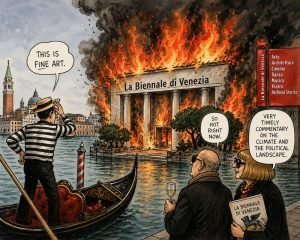


As the Venice Biennale opens next week amid cascading crises, the oldest art biennial cannot pretend that culture and geopolitics occupy separate rooms.
Read More
by Henrietta Landells
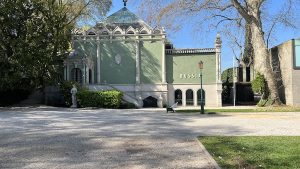
In this bubbling forth of a kind of collective unconscious, Venice seemed renewed to me as a potent setting for the Biennale ritual gathering. Both the new commissions (alchemy on demand?) and the rediscovery of already-existing webs of knowledge and practice perhaps more easily take on a kind of ‘global’ existential resonance, when re-contextualised and re-purposed here. At the least, they suggest new alternative futures remain available, via these alternative pasts-within-the-present.
Read More

by Henrietta Landells
Amidst the disorientation that follows our re-emergence from an extended period of isolation and uncertainty, curator Cecilia Alemani presents Milk of Dreams, a large-scale matriarchal gathering bringing the work of over 200 contemporary artists from 58 countries to Venice, together with works by a selection of historical female artists from the 19th century onwards.
Read More

by Maria Lind and Anca Rujoiu
So, what do biennials do? Or more specifically, what did this biennial – the Art Encounters Biennial 2019 – do? Some possible answers are already on the tips of our tongues; others will come over time. We’d like to think that this biennial made possible a wide variety of encounters between art, the inhabitants of Timișoara and visitors, alike – not only throughout 2019, but also beyond, for a number of artworks will remain in the city, and new relationships have been forged.
Read More
Vincent Pruden talks to the Aichi Triennale’s Chief Curator, Iida Shihoko.
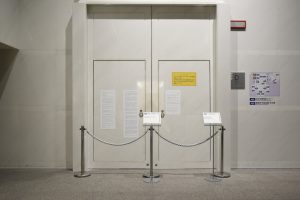
When shown at Gallery Furuto in Tokyo in 2015, the Freedom of Expression?, exhibition assembling works that had earlier been rejected or removed by other exhibition organizers in Japan amid controversy, went almost unnoticed. When the updated version of the show opened as part of the 2019 Aichi Triennale, earlier this year, it ignited extreme reactions and re-opened debate over the increasing prevalence of censorship in Japan. Vincent Pruden talks to the Aichi Triennale’s Chief Curator, IIDA Shihoko about the aftermath of the controversy which represents a serious threat to the future existence of one of the most important biennials in Asia.
Read More

The Shoreline Dilemma, the inaugural edition of the Toronto Biennial of Art (the Biennial), launches on Saturday, September 21, 2019, with special opening weekend programming. The Exhibition, presented across several sites throughout the 72-day event, remains on view until December 1, 2019.
Read More
by Andrew Stefan Weiner
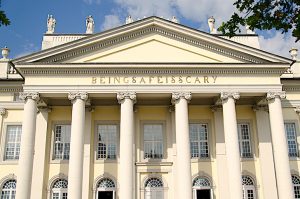
The obvious reason that some critics have cast Szymczyk and his team as morally superior “social justice warriors” is that it is much easier to fling stereotypes than it is to work through the complex implications of the fundamental message that this documenta means to communicate. At the core of this sprawling, wildly ambitious, sometimes incoherent, but certainly worthwhile exhibition lies a deceptively simple proposition: that art can and should serve the cause of justice, but not always in the ways we might expect.
Read More
by Andrew Stefan Weiner
It might be that some degree of controversy at the Whitney Biennial is inevitable, given its oft-stated ambition to somehow “take the temperature” of contemporary American art. Yet to agree to this objective is first of all to admit that such a thing is even possible and furthermore that it is desirable, when in fact neither of these points is exactly self-evident. Why shouldn’t some Biennials be more limited and thematic, rather than comprehensive?
Read More
by Terry Smith
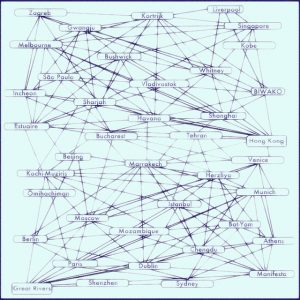
When we look back at the century plus history of recurrent survey exhibitions of contemporary art––those we call biennials, triennials, and (at Kassel, itself expanding) documentas––we can see that they slowly established a set of distinctive protocols, that were formalized during the 1980s, then rapidly replicated throughout the world, while at the same time steadily increasing in size and scope.
Read More
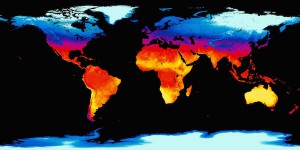
The world’s hottest and coolest biennials are set to open in early 2017
Amongst increasing interest in environmental conditions and challenges brought about by the climate change, 2017 will see the emergence of two new biennial exhibitions set in extreme weather conditions.
Read More