Pure Intention

Pure Intention: the 8th Singapore Biennale

The title of the 8th of the Singapore Biennale, Pure Intention, can come across as both sarcastic and deeply sincere. It reflects the role and function of art and large-scale exhibition-making in a time when the art world is experiencing biennale fatigue, while still seeming to overlook the interests of a wide-ranging general audience.
Read More

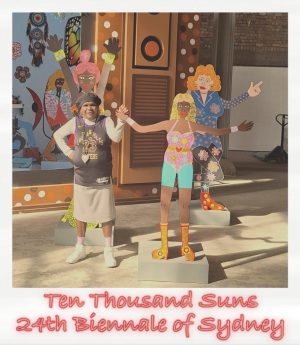
NIRIN

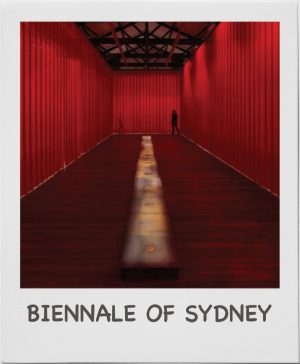
NIRIN: the 22nd Biennale of Sydney

Our correspondent Michaela Bear had a chance to visit the 22nd Biennale of Sydney days before it closed to the public on Tuesday, 24 March 2020. Her reports describes an exhibition giving voice to under-represented communities, issues and histories…
Read More

Al-Ula

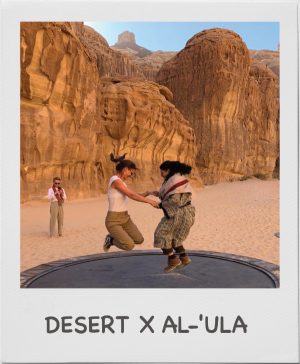
The biennial franchise has arrived – in Al-Ula and on Instagram

by Melissa Gronlund

When Desert X – a young biennial from California – announced it would be producing an exhibition in the Saudi desert site of Al-Ula, it ignited a firestorm of international opposition. Three board members resigned, including Ed Ruscha, in order to protest the collaboration with the Saudi state. Discussions about boycotts dominated coverage…
Read More

Slavs and Tatars

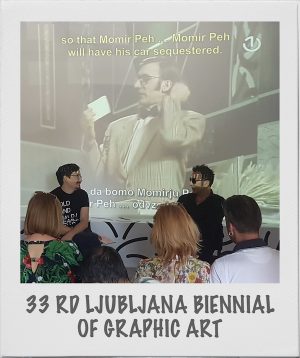
Tell a joke and shame the devil: 33rd Ljubljana Biennial of Graphic Art

by Vladimir Vidmar

Plagued by problems direr and darker than ever before in history, and more disillusioned than ever, we turn to our everyday to find fragments of inspiration that could potentially ignite the spark of change. Such is this case with the 33rd Biennial of Ljubljana, entitled Crack up, Crack down, where its curators, the artist collective Slavs and Tatars pose a question: In the era of post-truth, can a joke set us free?
Read More

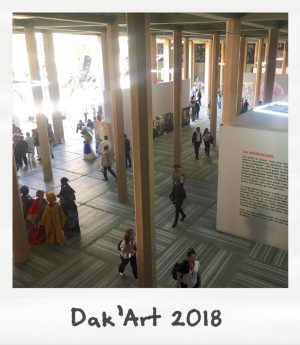
Dak'Art 2018

Getting INto Dak’Art 2018

by Kara Blackmore

The 13th edition of the Dak’Art Biennial explores the contingencies of exhibition-as-novel, the curatorial approach taken by its Artistic Director Simon Njami. Known as one of the luminaries of the contemporary African arts and the founder of Revue Noir, Njami often positions himself as a writer, aspiring to emphasize a narrative thread and literary rhythm of the exhibitions he undertakes…
Read More

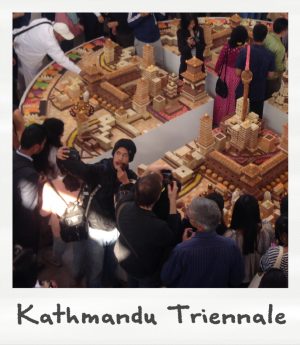
Kathmandu Triennale

Making Place: a report on the first Kathmandu Triennale

by Zeenat Nagree

Outsiders occupy a unique position to look in, to observe or to critique. Patterns and characteristics that are unrecognisable or even irrelevant to insiders come to the fore; insights gained and buried layers exposed. Such encounters are commonplace in the art world, unremarkable almost. Yet, the depth and complexity brought by these encounters deserves particular attention when they involve artistic transactions, sites of visibility, and history writing – occurring in the context of large exhibitions, such as biennials or triennials.
Read More

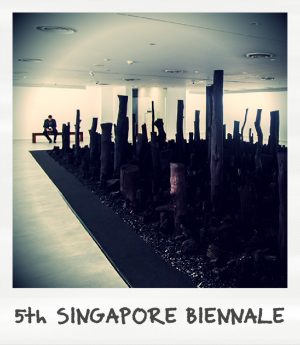
5th Singapore Biennale

The fifth edition of the Singapore Biennale: It could be worse

by John L Tran

The nine conceptual zones, which include explorations of cultural identity, post-colonialism, agency and psychogeography, are a love letter to critical thinking. With titles like A Presence of Pasts and A Somewhere of Elsewheres it has to be said that the letter is written in purple prose, and a little overdetermined, but still – not bad for an art festival in a country that has draconian gum laws.
Read More

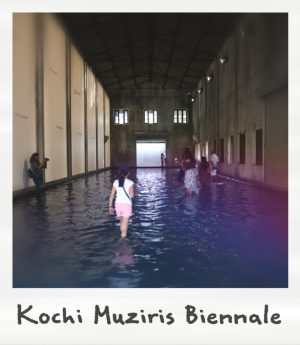
Kochi Mizuris Biennale

Timely Provocations: The 3rd Kochi-Muziris Biennale

by Robert E. D’Souza and Sunil Manghani

Far from the recognised centres of contemporary art of Mumbai and Delhi, the Kochi-Muziris Biennale has generated a great deal of interest among the art fraternity. Now into its third edition, the Biennale’s ‘creation myth’ still pervades with nostalgia for how – ‘against all odds’ – it came to fruition.
Read More

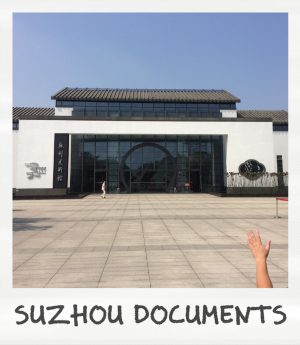
Suzhou Documents

Biennialgram from Suzhou Documents

by Shwetal A. Patel

The co-curators of the inaugural exhibition ‘Histories of a Global Hub,’ Zhang Qing (Founding Director of the Shanghai Biennial and Curatorial Head of the National Palace Museum in Beijing) and Roger M. Buergel (Artistic Director of documenta 12 (2007) and Director of the Johann Jacobs Museum in Zurich), set out to eschew what they saw as the ‘largely exhausted’ biennale format. Describing the latter as a ‘bouquet of arbitrary themes’ with an emphasis on spectacle, they argue for the value of depth and sensitivity in bringing together the ancient and modern in a sustainable, yet rigorous manner.
Read More