

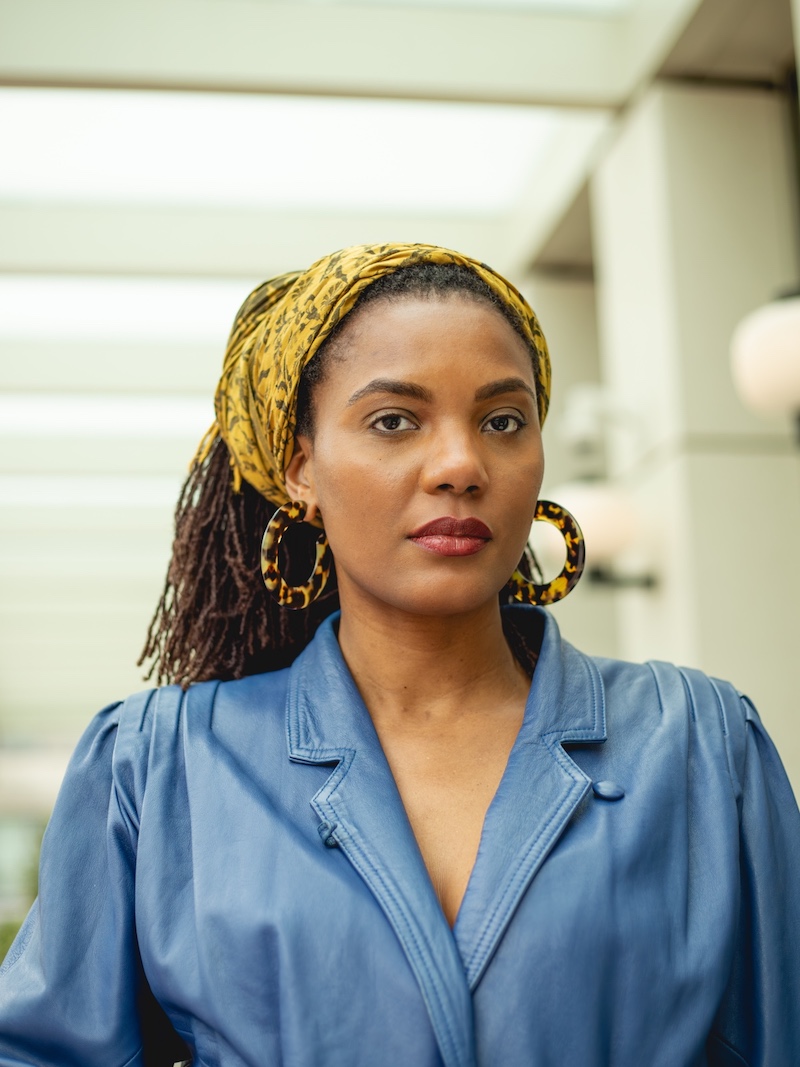
The Biennale de Lubumbashi returns in October 2026 for its 9th edition bringing together two curatorial voices whose practices engage histories, memory, visibility, and diasporic narratives: Sorana Munsya and Jermay Michael Gabriel. For more than fifteen years, the Biennale has established itself as one of the leading spaces for contemporary artistic reflection and creation on the African continent, while remaining the only independently organized contemporary art biennale in Sub-Saharan Africa rooted in Lubumbashi.
This new edition will be shaped by the thought of Valentin Yves Mudimbe, the major Congolese philosopher, writer, and thinker who passed away last year, and whose work continues to inspire generations of artists, researchers, and intellectuals across the world.
Before his passing, Valentin Yves Mudimbe donated his personal library to the Université de Lubumbashi. Thanks to the long-standing partnership linking the Biennale and Picha to the university, the curatorial team now has privileged access to this exceptional collection of archives, books, and intellectual traces, which forms a key point of departure for this edition.
The 9th edition of the Lubumbashi Biennale aims to open a space for dialogue between contemporary art, memory, transmission, and knowledge production through the questions raised by Mudimbe’s thought: the construction of knowledge, historical narratives, colonial inheritances, forms of opacity, and ways of reinventing contemporary imaginaries.
Two Curators, One Vision.
A Belgian-Congolese independent curator based in Brussels, Sorana Munsya is a curatorial fellow of the Fonds National de la Recherche Scientifique (FRS-FRArt), founding director of Nsomi, and is currently co-directing her first documentary, Nos Errances. Her practice explores the production of space, history, and visibility through the lens of Black life, connecting research, exhibitions, and discursive practices. Her projects engage African and diasporic narratives while challenging the institutional and epistemic frameworks through which they are produced and understood. She has collaborated with institutions including Kanal-Centre Pompidou, Bozar, and ARGOS Centre for Audiovisual Arts, while also developing an important editorial and critical practice through publications such as GLEAN Art Magazine, e-flux Architecture, and Chimurenga.
An artist, curator, and professor at Addis Ababa University, Jermay Michael Gabriel is also the founder of Black History Month Milano. His experimental practice explores questions of identity, memory, and transformation through archives, architectural references, and hybrid visual languages combining performance, photography, and installation. His work interrogates epistemological constructions between Europe and Africa while dismantling imaginaries shaped by historical and colonial hierarchies. Moving between the visible and invisible, burial and revelation, his practice proposes a critical re-reading of histories suspended between forgetting and re-emergence.
An Edition Looking Toward the Future
This 9th edition also marks an important milestone in the history of the Lubumbashi Biennale, already paving the way toward its 10th edition.
Photo: Agnes Kena.